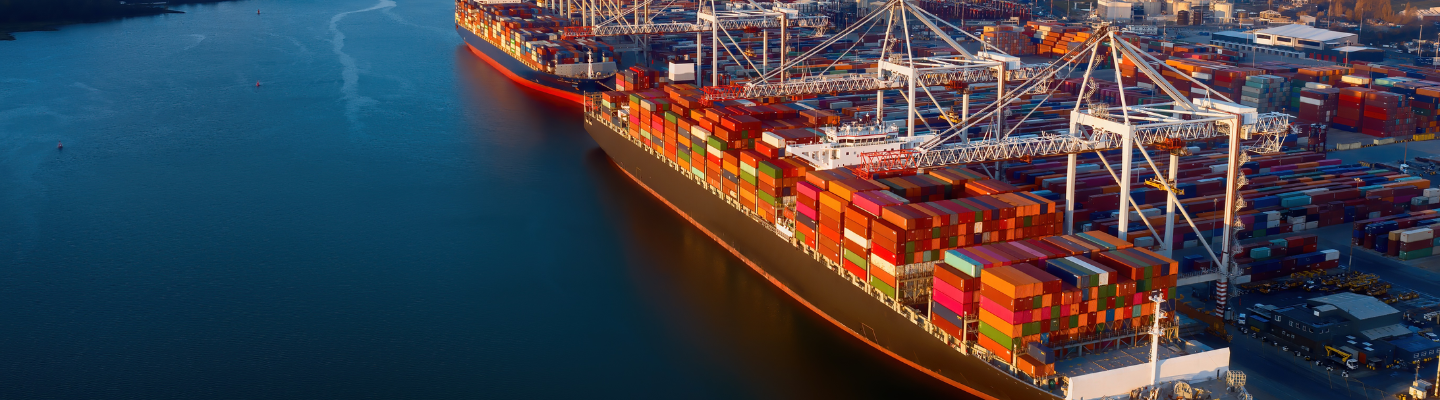
Ireland’s latest trade figures underline the scale of what is at stake. Preliminary data from the Central Statistics Office shows exports reached a record €260.3 billion in 2025, with imports rising to €144 billion. Some of this activity was driven by companies accelerating shipments ahead of potential tariff changes — a clear example of how quickly external decisions can reshape trading patterns.
If your business operates across borders, the ability to respond to these shifts depends, in part, on how well your customs processes are structured.
In practice, customs clearance often involves multiple parties: brokers, freight forwarders, logistics teams and internal finance or compliance functions.
Because of this, it is easy to assume that responsibility for compliance is shared in the same way.
It is not.
While a customs clearance agent may submit declarations and interact with authorities, the legal responsibility for the accuracy of those declarations remains with you as the importer or exporter. This distinction is not always front of mind — until something needs to be explained or justified.
Where expectations and reality diverge
If you rely on a customs agent, some of the following assumptions may sound familiar. They are common — but they do not always reflect how responsibility is applied in practice.
Assumption: “Our customs agent is responsible for getting it right”
In reality, the trader remains responsible for the accuracy of the declaration — including classification, valuation and origin. Even where a third party submits the entry, the underlying data remains your responsibility.
Assumption: “If goods clear customs, everything is compliant”
In practice, clearance only confirms that goods have been released, not that the declaration is free from error. Discrepancies can be identified later and reassessed, sometimes months after the original shipment.
Assumption: “Our agent manages all documentation”
Customs agents process documentation, but they rely on the information provided. Where data is incomplete, inconsistent or unclear, this can flow directly into the declaration.
These are not technical nuances. They shape how exposed — or how prepared — your business is when questions arise.
What stronger customs governance looks like
Businesses that manage customs effectively tend to approach it as a structured discipline rather than a transactional step.
This does not necessarily mean doing more. It often means having clearer oversight of what is already being done.
If you are reviewing your current arrangements, a few practical questions can help:
Supporting visibility and control
BDO’s Customs & International Trade team works with businesses that want greater visibility and control over their customs activity, without increasing internal administrative burden.
Through the BDO VIP Customs Clearance service, companies retain access to their declarations and records, while a specialist team manages submissions and engages with Revenue and other authorities on their behalf.
The service also provides structured reporting on customs activity and full document retention for audit purposes, helping ensure that information remains accessible and organised if queries arise.
This combination allows businesses to maintain oversight of their customs processes while ensuring declarations are prepared accurately and consistently.
A moment to reassess
In a trading environment where external conditions can shift quickly, customs is no longer just about moving goods across borders.
It is about understanding what is being declared in your name — and being able to stand over it when required.
If responsibility ultimately sits with your business, it is worth asking whether your current setup gives you the level of visibility and control needed to manage that responsibility with confidence.