

CBAM enters its next phase: what it means for EU importers

view-green-forest-trees-with-co2

Published: 

The Carbon Border Adjustment Mechanism (CBAM) aims to tax carbon emissions from the production of carbon-intensive goods entering the EU. It aims to ensure that EU producers taxed on their carbon emissions within the EU are not disadvantaged compared with importers. 

Featured in the Accountancy Ireland Magazine, Marie Farrell, Manager in the Customs & Intl Services department at BDO, outlines how this mechanism aims to ensure that EU producers taxed on their carbon emissions within the EU are not disadvantaged compared with importers. 

CBAM requires importers of carbon-intensive goods from non-EU countries to declare the embedded emissions. If emissions exceed EU standards, importers will have to purchase CBAM certificates (from Feb 2027) and surrender them to cover the Carbon Cost of the embedded emissions of their goods. 
 

CBAM Enters Definitive Phase 

On 1 January 2026, the European Union’s Carbon Border Adjustment Mechanism (CBAM) entered its definitive phase, marking a significant transformation for global supply chains and importers into the EU. Supply chain leaders and finance professionals must act strategically to ensure readiness, manage costs and align with evolving sustainability expectations.   

This phase now requires importers of CBAM goods—currently including iron and steel, aluminium, cement, fertilisers, electricity, and hydrogen—to purchase and surrender CBAM certificates equivalent to the embedded emissions of their imports.


What products are within the scope of CBAM?    

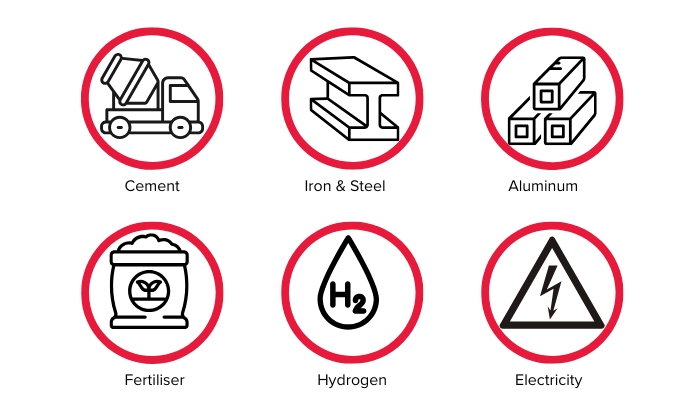
The current products in scope of CBAM are steel, aluminium, cement, fertilisers, hydrogen, and electricity.

CBAM IN SCOPE PRODUCTS = 27% of total EU GHG emissions.

Logo-of-Cement-Iron-&-steel-aluminium-fertiliser-hydrogen-electricity


Key requirements for Importers 

1. Authorised CBAM Declarant Status

All importers of CBAM-covered goods - including iron and steel, aluminium, cement, fertilisers, electricity, and hydrogen - must register as Authorised CBAM Declarants via the EU CBAM Portal. These applications will then be reviewed by the EPA (Environmental Protection Agency). 

This applies to importers of in-scope products where a company’s annual imports are 

  • > 50 tonnes/calendar year of steel, aluminium, cement, fertilisers 
  • any hydrogen and electricity 


The application for the status of authorised CBAM declarant must be submitted before the date of import on which the 50-tonne threshold is exceeded. 

The final registration date was 31st March 2026, to account for imports from 1st January. 


2. Annual CBAM Reports 

By 30 September each year, importers will be required to submit an annual CBAM declaration for the previous calendar year, detailing actual embedded emissions by product and installation. This requires accurate, verifiable emissions data from across the supply chain.  Where actual verified emissions are not available, default emission values must be used. 


3. Purchase and Surrender of CBAM Certificates 

Importers must purchase CBAM certificates from the EU, priced according to the weekly average price of EU Emissions Trading System (ETS) allowances. 

*Note: 2026 will be based upon a quarterly price, and certs can be purchased in Feb 2027 


The number of certificates surrendered must match the total verified emissions or default emissions of imported goods, less any carbon price already paid in the country of origin. 


4. Use of Verified Data  

Importers have two choices in making returns to the Authorities:  

  1. Importers can use default values. However, as stated above, these are intended to be punitive over the long term.
  2. Alternative Importers can use actual values. These must, however, be subject to independent verification.

Measuring & Reporting Embedded GHG Emissions  

Embedded emissions of in-scope products are calculated at the installation level. This uses the method for reporting of emissions under the EU ETS for production of the same goods within the EU. This is defined in Annex IV Regulation (EU) 2023/956 and supporting regulations1, and covers the specific emissions, GHG covered and how direct and indirect emissions are determined for each sector. 

Emissions are attributed only to a production process and to the products covered by that process. Importers may rely on published default values “where appropriate”, rather than being strictly required to obtain actual, installation-level emissions data from every supplier in all cases. However, if reporting actual emissions data, the data must: 

  • Identify the specific manufacturing installation where goods were produced 
  • Include measured direct and indirect emissions at installation level 
  • Be based on a verified monitoring plan and disaggregated per production unit 
  • Be independently verified by a practitioner certified to ISO14064:3. 

The importer is required to submit to the Competent Authority an “Operators Emissions Report” which documents the Embedded GHG Emissions, supporting data, calculations, method and monitoring.  

Areas of focus

As you prepare for CBAM compliance, there are a number of focus areas to consider: 


Identify Applicability: Who Is Impacted? 

Start by pinpointing which of your organisation’s products and supply chains fall under CBAM - such as iron, steel, cement, aluminium, fertilisers, electricity, and hydrogen. Since CBAM applies to imports into the EU, mapping the flow of imports of these goods is essential.


Collect and Organise Data 

Companies must quantify the embedded carbon emissions in their imports of in-scope goods. Verified supplier emissions data is critical, as is a robust document retention system to support accurate reporting and audit readiness.


Compliance, Risk Management, and Training 

Stay abreast of evolving CBAM regulations. Establish internal controls and regular reviews for ongoing compliance, and ensure relevant staff are trained on CBAM obligations and reporting.


Financial Planning: Special Focus on 2026 Provisioning 

A unique challenge for 2026 is that CBAM certificates cannot be purchased until February 2027, and verified emissions data will only be available once the 2026 production year is complete. This means:

  • Companiesmust create financial provisions for 2026 using the best available estimates of embedded emissions and certificate pricing.
  • Once verified data is available, these provisions can be adjusted.Early and transparent provisioning is essential foraccuratefinancial reporting and audit preparedness.
  • Accountants play a key role in scenario planning, forecasting, and ensuringappropriate disclosures around these provisional estimates.


Optimise Technology and Processes 

Given the complexity, manual tracking is no longer viable. Where organisations are importing at a large scale and with numerous suppliers, we recommend the use of digital tools for emissions tracking and reporting to ensure accuracy and efficiency.  

You should also consider integrating CBAM data collection within your organisation’s broader ESG and sustainability initiatives. 


What are the Challenges


  • Need for Actual Emissions Data 

CBAM places strong emphasis on obtaining verified actual emissions data from the third-country installations supplying an importer (i.e., your suppliers’ manufacturing sites). Importers must therefore work with suppliers to obtain verified emissions data for their imports of in-scope goods to enable accurate CBAM reporting. 

We would advise this process starts immediately, if not in place already. 


  • Default Values: A Costly Alternative 

If actual emissions data is not provided, importers must use default values set by the European Commission. Default values are intended to ultimately be punitive, significantly raising costs for those unable to obtain verified supplier data.  Default values carry a 10% mark up in 2026, rising to 30% by 2028.  

Actions in-scope organisations can take to future-proof CBAM Compliance


  • Proactive Supplier Engagement 

Importers and procurement teams must update supplier contracts and require the provision of verified CO₂ emissions data as a condition of doing business. Suppliers may need education, support, or incentives to implement emissions measurement and verification systems. 

  • Integrate Emissions Data into Procurement 

Emissions data collection should be embedded in supplier onboarding, tendering, and performance reviews. Supplier selection must now weigh emissions data quality alongside cost, quality, and delivery performance.

  • Mitigate Supply Chain Risk 

Suppliers unable to provide emissions data risk making their products uncompetitive due to higher CBAM costs. Proactive mapping and risk assessment are essential—consider dual sourcing or supplier development to mitigate disruptions. 

  • Establish Internal CBAM Systems 

Establish internal systems for tracking, reporting, and purchasing CBAM certificates. Monitor regulatory updates as the EU continues to refine CBAM implementation.

CBAM Scope Expansion: What’s Next? 


The EU is set to significantly expand the scope of CBAM to downstream products. In addition to the initial basic materials, the EU is set to include around 180 steel and aluminium-intensive downstream products. This expansion will cover: 

  • Car parts 
  • Household appliances (washing machines, refrigerators) 
  • Metal furniture 
  • And a broad array of other manufactured goods 

This wider scope is proposed to take effect from 1 January 2028, meaning even companies not previously impacted by CBAM must prepare for compliance. Supply chains that extend beyond raw materials into finished and semi-finished goods will need to ensure traceability and emissions data capture.

Conclusion 

The definitive phase of CBAM fundamentally changes the rules for importing carbon-intensive goods into the EU.  

Proactive supply chain management, robust supplier engagement, accurate emissions data and prudent financial provisioning, especially for 2026, are now essential for compliance and competitiveness. By acting now, importers can manage costs, minimise risks, and demonstrate leadership in sustainable supply chain practices. 

Our combined customs and sustainability offering ensures that compliance with trade requirements goes hand-in-hand with ESG due diligence, helping clients navigate new regulatory landscapes, keep global markets open, and strengthen supply chain resilience.

Resources